
The FIZE kUO implements a smart drainage technology.
Unlike a manual urinometer where urine is drained by a constant sub-pressure applied to the bladder by gravity, the FIZE kUO sensor detects urine and enables its drainage by the application of an adaptive sub-pressure, comparable to that of a manual urinometer.
The Basics
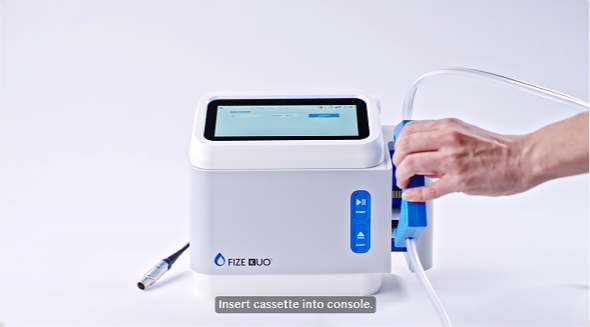
FIZE kUO Setup Guide
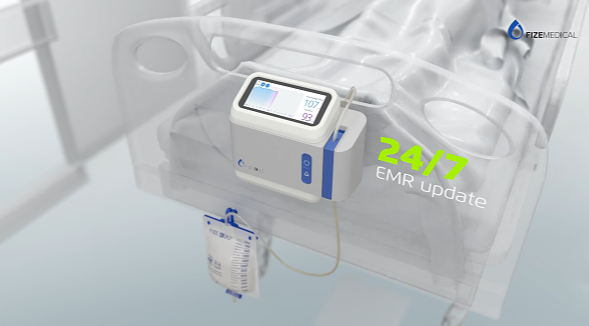
FIZE kUO Patient Transportation Guide
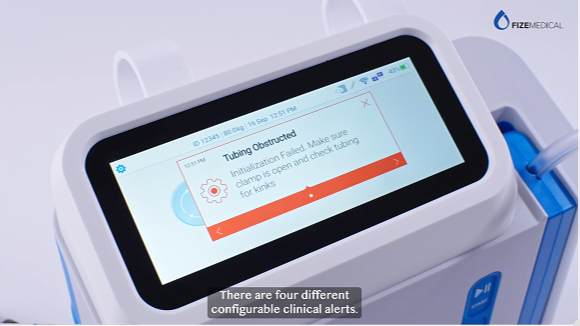
FIZE kUO Alerts Guide
FIZE kUO Quick Guide
FIZE kUO Pocket Guide
Downloads
FIZE kUO Quick Guide
FIZE kUO Instructions For Use V10.1
Article- Automated vs. Manual Urine Output Monitoring in the ICU
Article- Urine Output Measurement by a Novel Electronic Urinometer is Much More Accurate Than Conventional Urinometer
FIZE kUO Brochure 2025
Literature Review Booklet
CMS Prioritizes Kidney Health
FIZE kUO Disposable Standard Kit Instructions For Use V1
FAQ @FIZE
How does the device drain the urine?
Is the urine in the tubing already measured?
Yes, urine is measured immediately as it enters the tip of the Foley catheter. Therefore, all urine is measured regardless of its position in the tubing .
The device prompted an alert. How do I solve the issue?
Possible Catheter obstruction
The system has detected a potential catheter clog. Check if the catheter is
clogged, and manage according to hospital guidelines.
Tubing obstructed
Make sure tubing is unclamped, free of kinks and properly secured to the
catheter. If the issue persists, replace kit.
Kit Expiration alert
The disposable kit is considered expired after 14 days or after reaching its
maximal drainage capacity. Replace the kit as described in the Patient Care
section. Kit status can be viewed at any time by pressing the cassette icon in
the upper toolbar
Clinical alerts (Such as Low Urine, etc.)
Appear when urine output is above or below the defined threshold
The alerts can be adjusted according to preference through the Settings screen,
under the Patient > Clinical Tab
*To enable/disable alert press the toggle icon
*To turn the sound on/off press the speaker icon
*To change the urine output threshold or the alert time interval, press the volume
or the time value
The system has detected a potential catheter clog. Check if the catheter is
clogged, and manage according to hospital guidelines.
Tubing obstructed
Make sure tubing is unclamped, free of kinks and properly secured to the
catheter. If the issue persists, replace kit.
Kit Expiration alert
The disposable kit is considered expired after 14 days or after reaching its
maximal drainage capacity. Replace the kit as described in the Patient Care
section. Kit status can be viewed at any time by pressing the cassette icon in
the upper toolbar
Clinical alerts (Such as Low Urine, etc.)
Appear when urine output is above or below the defined threshold
The alerts can be adjusted according to preference through the Settings screen,
under the Patient > Clinical Tab
*To enable/disable alert press the toggle icon
*To turn the sound on/off press the speaker icon
*To change the urine output threshold or the alert time interval, press the volume
or the time value
Why was the cassette ejected from the console ?
Description
Cassette was ejected by the system following a timeout due to an ignored alert (low battery, tubing obstruction, etc.)
Ejection cause will be specified in the alert.
Solution
Check the cause of cassette ejection specified in the alert and address accordingly.
After eliminating the cause for the alert, re-insert cassette.
Cassette was ejected by the system following a timeout due to an ignored alert (low battery, tubing obstruction, etc.)
Ejection cause will be specified in the alert.
Solution
Check the cause of cassette ejection specified in the alert and address accordingly.
After eliminating the cause for the alert, re-insert cassette.
Battery Low
Description
Console battery is low
Solution
Connect console to power supply using the provided cable
Console battery is low
Solution
Connect console to power supply using the provided cable
Initialization Failed
Description
Measurement initialization could not be completed
Solution
Try Initializing again. If initialization failed again, replace kit.
Measurement initialization could not be completed
Solution
Try Initializing again. If initialization failed again, replace kit.
Monitoring Paused
Description
Monitoring paused by the user
Solution
Press “resume” to continue monitoring
Monitoring paused by the user
Solution
Press “resume” to continue monitoring
Hardware Failure
Description
System detected a hardware failure while monitoring
Solution
Restart device by pressing the ‘Restart’ button in the alert.
If the issue is not resolved – shut down device and contact FIZE Medical Technical Service
System detected a hardware failure while monitoring
Solution
Restart device by pressing the ‘Restart’ button in the alert.
If the issue is not resolved – shut down device and contact FIZE Medical Technical Service
The urine volume in the collection bag doesn't match the urine volume I see on the FIZE kUO screen. How is this possible?
Discrepancy between the volume observed in the urine collection-bag and the volume presented on the FIZE kUO screen can arise from several reasons, among which are:
• Urine in the collection bag was accumulated over a different time period than the value you observe on the screen.
• Cassette was ejected and urine flowed to the collection bag without being measured.
• Urine in the collection bag was accumulated over a different time period than the value you observe on the screen.
• Cassette was ejected and urine flowed to the collection bag without being measured.
How do I transport a patient who's connected to the FIZE kUO?
Before you transport the patient, disconnect the console from the power supply. (The device can run on its battery for up to 4 hours.) To stop measurement during transportation, press the Eject button. Urine will flow into the collection bag without being measured.
For more information, see the FIZE kUO Patients Transportation Guide - https://youtu.be/m81OjiWcXM8
For more information, see the FIZE kUO Patients Transportation Guide - https://youtu.be/m81OjiWcXM8
Is the FIZE kUO MR safe?
The FIZE kUO Disposable Kit is MR Conditional, so it can remain connected to the patient during an MRI scan. The exact MRI conditions are defined in the Instructions for Use. (Please review the information to make sure your MRI is included.)
Note: The disposable kit should be located between the patient's legs and the urine bag should be located at the end of the bed (on the far side of the MRI scanner). The FIZE kUO console is MR unsafe.
Note: The disposable kit should be located between the patient's legs and the urine bag should be located at the end of the bed (on the far side of the MRI scanner). The FIZE kUO console is MR unsafe.